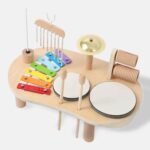
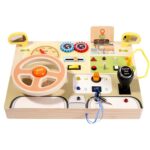
The first few years of a child’s life are filled with exciting developmental milestones. As babies become more mobile, they start reaching, standing, touching and exploring everything around them. A wooden activity table can turn these natural moments of curiosity into engaging, hands-on play while giving little ones plenty to discover.
What Is an Activity Table?
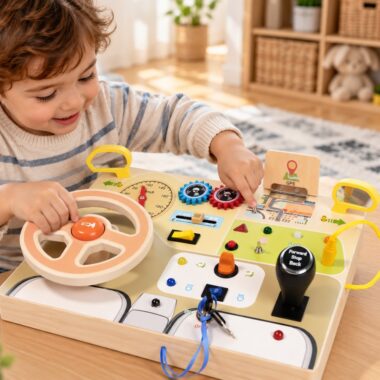
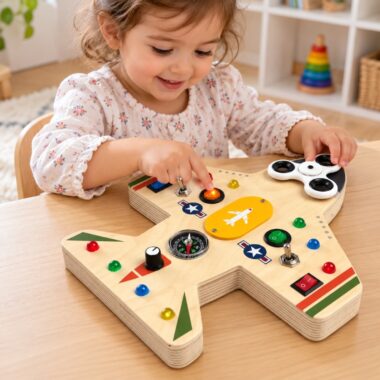
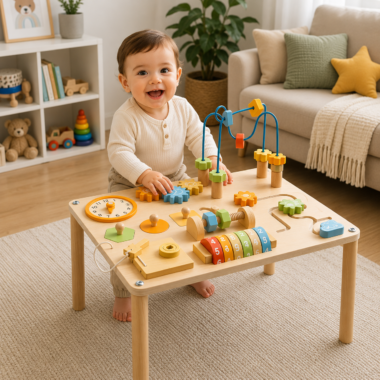
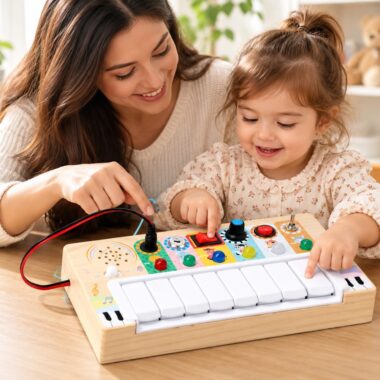
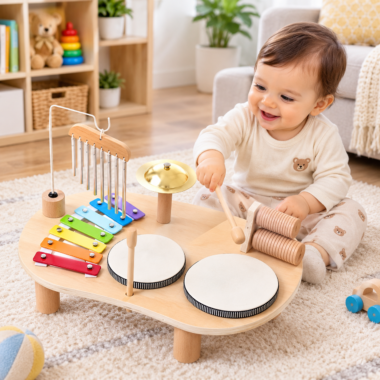
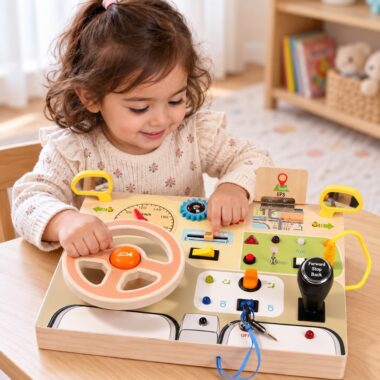
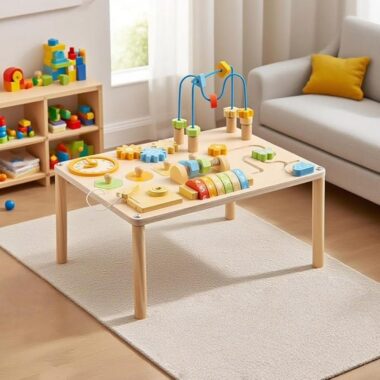
An activity table is a specially designed play table featuring different interactive elements such as gears, puzzles, spinners, shapes, beads, sounds or other hands-on activities.
Rather than simply being a place to sit and play, an activity table encourages children to interact with different features and discover how things work.
For parents, it can be a practical addition to a playroom or nursery, particularly when choosing a sturdy, age-appropriate design.
Why Choose a Wooden Activity Table?
Wooden toys are popular with parents because they offer a tactile and traditional alternative to electronic toys. A well-designed wooden table can provide several activities in one compact piece of furniture.
Benefits can include:
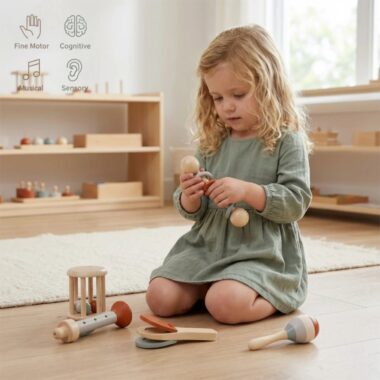
- Encouraging fine motor skills
- Supporting hand-eye coordination
- Introducing colours, shapes and numbers
- Encouraging problem-solving
- Promoting independent exploration
- Providing screen-free entertainment
The physical act of turning, moving, pushing and matching different components gives toddlers opportunities to practise controlled hand movements while having fun.
Choosing an Activity Table for 1 Year Old
When shopping for an activity table for 1 year old, age suitability is particularly important. Around the first birthday, many babies are becoming increasingly interested in standing, moving around and manipulating objects.
Look for a design with activities that are simple enough for developing skills but interesting enough to encourage repeated exploration.
A good table for this stage may include:
Spinning elements: Encourage toddlers to use their fingers and discover movement.
Shape activities: Introduce basic matching and recognition.
Bead mazes: Provide opportunities for controlled hand movements.
Gears and moving parts: Help children explore simple cause and effect.
Musical features: Add sound and sensory stimulation to playtime.
Always check the manufacturer’s recommended age range and safety information before buying.
How to Make Activity Table Play More Engaging
Parents don’t need to direct every activity. Allowing your child to explore independently can make the experience more rewarding.
You can also join in by naming colours, counting objects, describing movements or asking simple questions such as, “Where does this shape go?” This turns everyday play into an opportunity for communication and learning.
An activity table can also be used alongside other toys, giving children the freedom to move between different types of play.
Finding the Right Table for Your Toddler
When comparing tables, consider the age range, construction, size, stability and activities included. A multi-activity design can be particularly useful for parents who want one toy that offers several types of play.
For UK parents searching for engaging developmental toys, BabyShopper offers baby and toddler products suitable for different stages of early development.
Final Thoughts
A wooden activity table can become a valuable part of a toddler’s play area, offering opportunities to explore, practise motor skills and learn through hands-on discovery. By choosing an age-appropriate activity table for 1 year old, parents can create an engaging environment where learning and play naturally come together.